
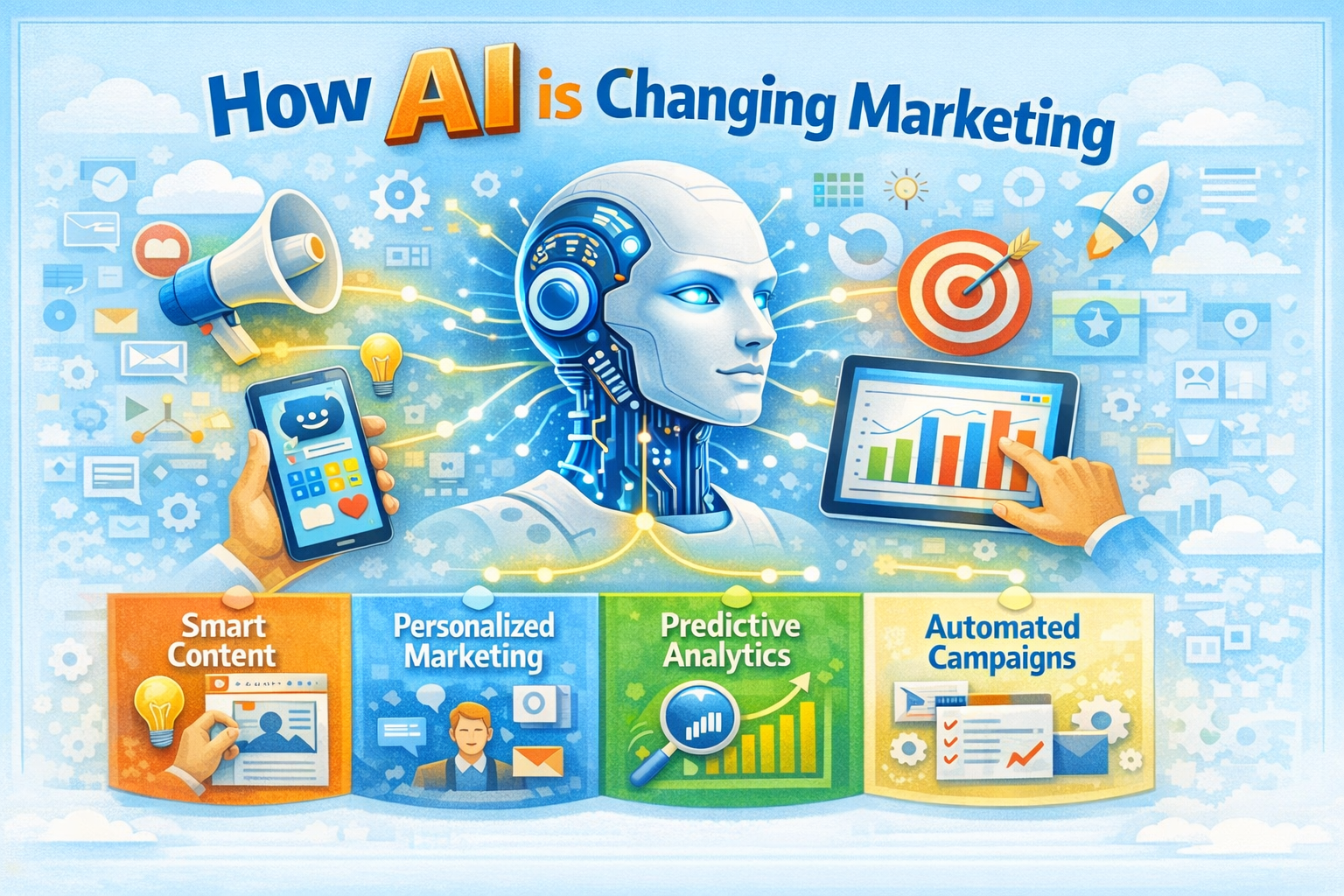
Working in digital marketing for a while now, I have noticed how things shift over time. Some trends fade quickly over time, but Artificial Intelligence (AI) has truly transformed the industry.
Back when I started, it was mostly about doing research manually, trying to predict what might work, and repeating the same processes again and again.
Now, with AI becoming integrated into workflows, marketers can think more strategically, automate repetitive tasks, and achieve results that are more consistent and scalable.
AI now covers many areas, from content creation to marketing automation. I have seen firsthand how it speeds up workflows and improves reliability, especially when businesses want to scale their operations. Companies that adopt AI strategies early often move ahead of competitors by becoming more efficient and achieving stronger returns ok.
Understanding AI in Digital Marketing
From my experience, AI in digital marketing refers to using advanced technologies to analyze data, automate workflows, and improve marketing performance.
Tools powered by AI allow marketers to:
- Analyze large volumes of customer data
- Predict user behavior using predictive analytics
- Automate repetitive marketing tasks
- Personalize experiences for individual users
This shift has reduced dependence on manual work and improved decision-making accuracy.
How AI Is Transforming SEO
When I first started using AI tools for SEO, it became clear how much faster tasks could be completed. In SEO, these tools have significantly changed how websites are optimized.
Smarter Keyword Research
Take keyword research, for example. It used to take hours to manually analyze data. Now, AI identifies keywords with strong search intent, detects emerging trends, and highlights opportunities competitors may have missed.
This data-driven approach makes decision-making more reliable and reduces guesswork.
AI-Powered Content Optimization
Content optimization is another area where AI performs well.
It can:
- Generate structured outlines
- Analyze readability
- Suggest improvements based on search intent
- Recommend keyword placement
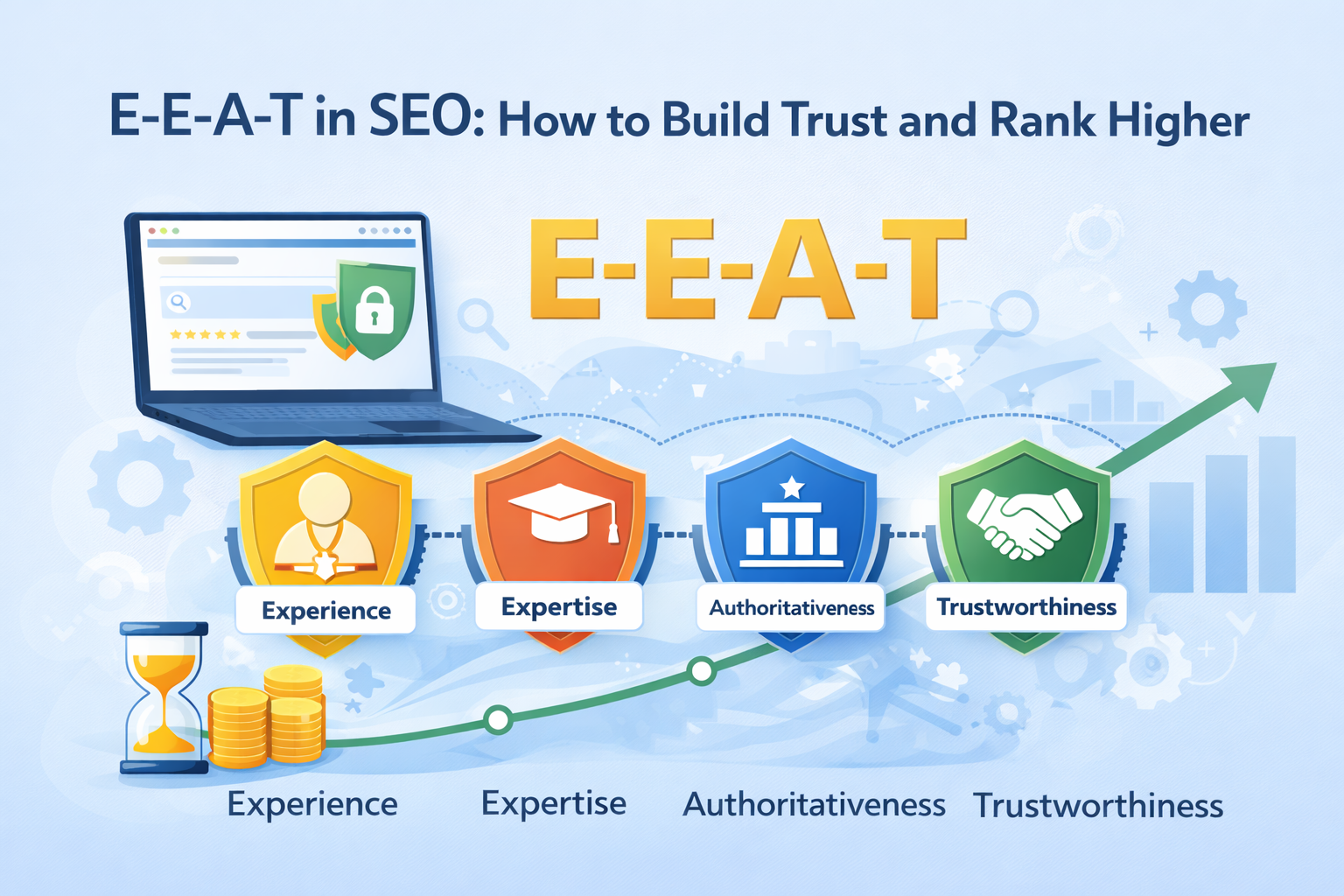
However, from my experience, the human touch is still essential. I use AI to create a starting point, then refine the content manually to meet quality standards and follow E-E-A-T guidelines.
Without human editing, content may feel generic or lack depth.
Technical SEO Improvements
On the technical SEO side, AI helps detect issues such as:
- Problems in site structure
- Broken links
- Slow pages
- Crawling errors
Tasks that once required hours of manual auditing can now be completed much faster. While AI tools are not perfect, they significantly improve efficiency.
AI in Content Creation
In content creation, AI has changed how blogs, landing pages, and social media content are produced.
I regularly use AI for:
- Brainstorming topic ideas
- Creating content outlines
- Improving headlines
- Editing and refining content
This does not eliminate creativity. Instead, it accelerates the early stages of content production, allowing marketers to focus on strategy and storytelling.
AI in Social Media Marketing
Social media marketing has also benefited significantly from AI.
Campaigns now use AI to:
- Schedule posts at optimal times
- Analyze audience reactions
- Identify trending topics
- Automate responses to user interactions
This automation reduces manual effort and saves valuable time.
AI in PPC Advertising
In PPC advertising, the role of AI is even more noticeable.
Advertising platforms use AI to:
- Optimize bidding strategies
- Target relevant audiences
- Predict conversions
- Improve ad performance
These improvements allow campaigns to run more efficiently and reduce wasted advertising spend.
AI Chatbots and Customer Experience
AI-powered chatbots have transformed how businesses communicate with customers.
They:
- Provide 24/7 customer support
- Deliver quick responses
- Improve customer satisfaction
- Reduce operational costs
This greatly enhances the overall customer experience.
Personalization with AI
Personalization is one of the strongest advantages of AI.
It allows businesses to:
- Recommend relevant products
- Customize email campaigns
- Display website content based on user behavior
This increases engagement and improves conversion rates.
Predictive Analytics in Marketing
Predictive analytics has become an essential marketing tool.
Instead of guessing customer behavior, AI analyzes historical data to:
- Identify upcoming trends
- Segment valuable customers
- Forecast future purchases
This makes marketing strategies more data-driven.
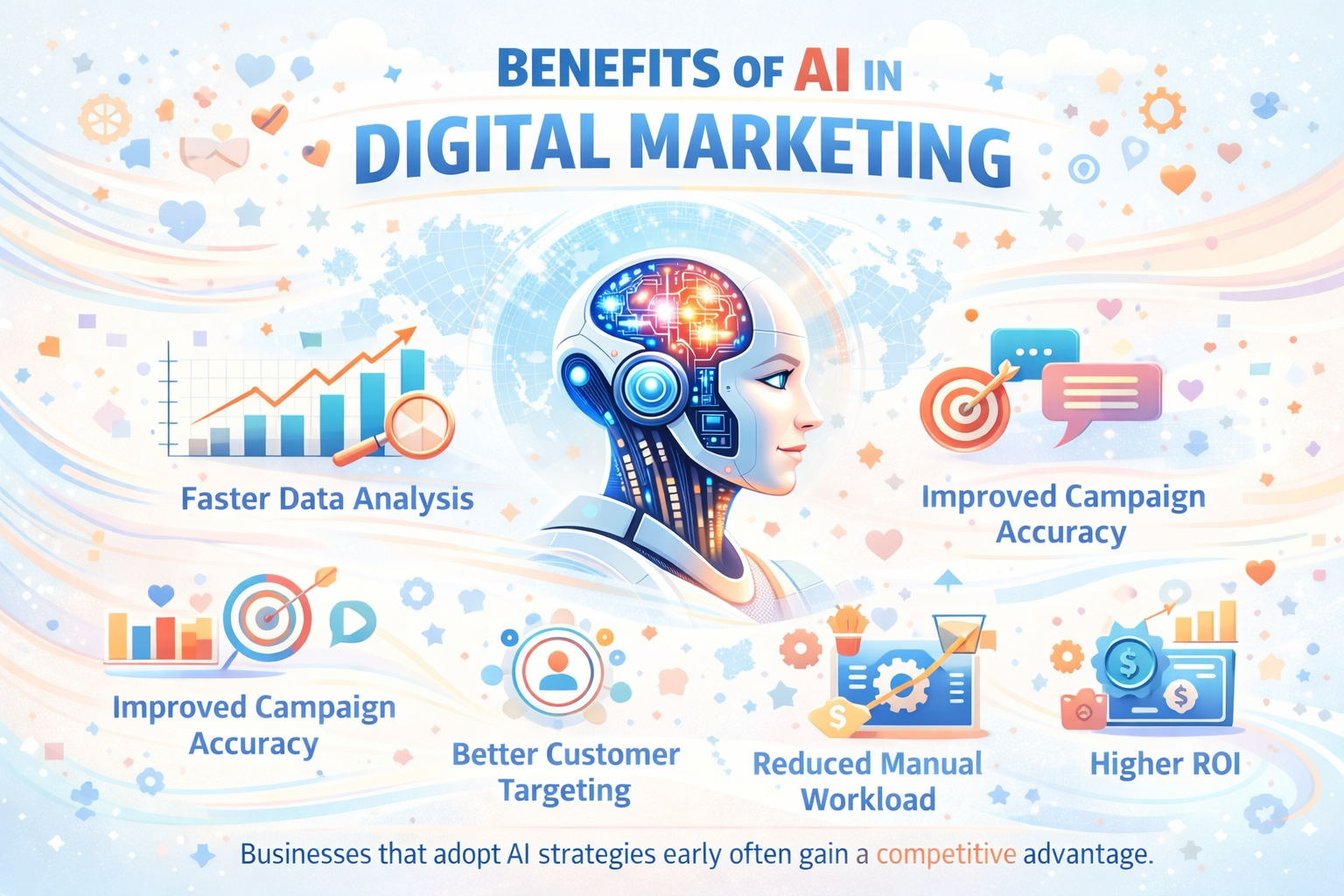
Benefits of AI in Digital Marketing
Key benefits include:
- Faster data analysis
- Improved campaign accuracy
- Better customer targeting
- Reduced manual workload
- Higher ROI
Businesses that adopt AI strategies early often gain a competitive advantage.
Challenges of Using AI in Marketing
Despite its advantages, AI also presents challenges.
Common challenges include:
- Poor data quality affecting results
- Learning complexity of new tools
- Risk of over-automation
- Difficulty maintaining creativity
The best approach is combining automation with human insight.
Future of AI in Digital Marketing
Possible future trends include:
- More advanced AI tools
- Highly personalized user experiences
- Automated content optimization
- Improved predictive modeling
- Growth of voice search and visual search
Businesses that adapt to these trends will remain competitive.
How I Use AI in My Workflow
In my own workflow, I have gradually integrated AI into digital marketing tasks.
I use AI for:
- Keyword research
- Content planning
- Campaign optimization
- Automating repetitive tasks
This improves efficiency and allows more time for strategic thinking.
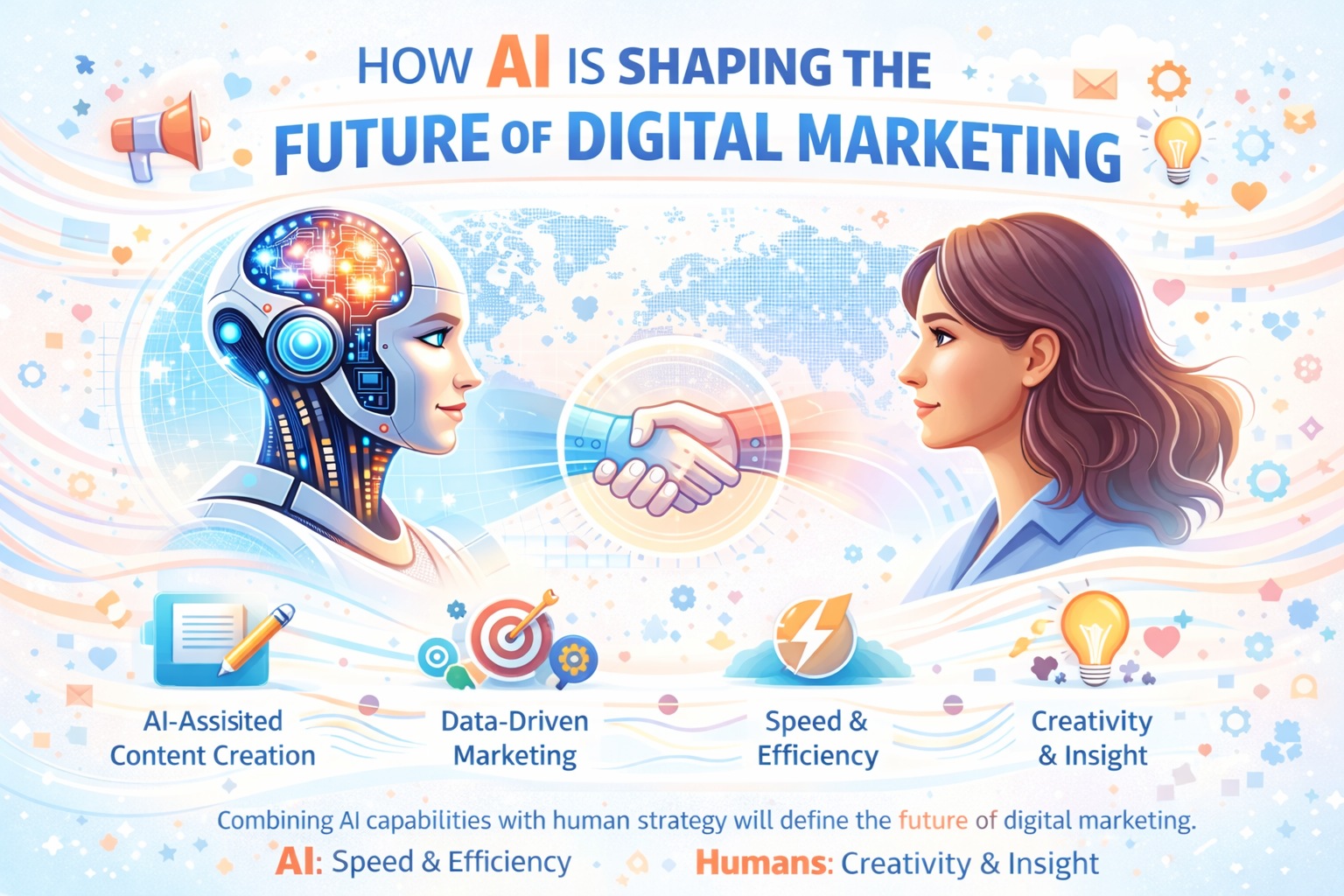
Final Thoughts on AI in Digital Marketing
After years of working in digital marketing, AI no longer feels like a temporary trend. Instead, it has become a fundamental part of modern marketing strategies.
From AI-assisted content creation to data-driven marketing, AI is transforming how campaigns are planned and executed.
The most effective approach is combining AI capabilities with human strategy. AI delivers speed and efficiency, while humans provide creativity, judgment, and real-world insight.
This balance will define the future of digital marketing.
Tagged with :