

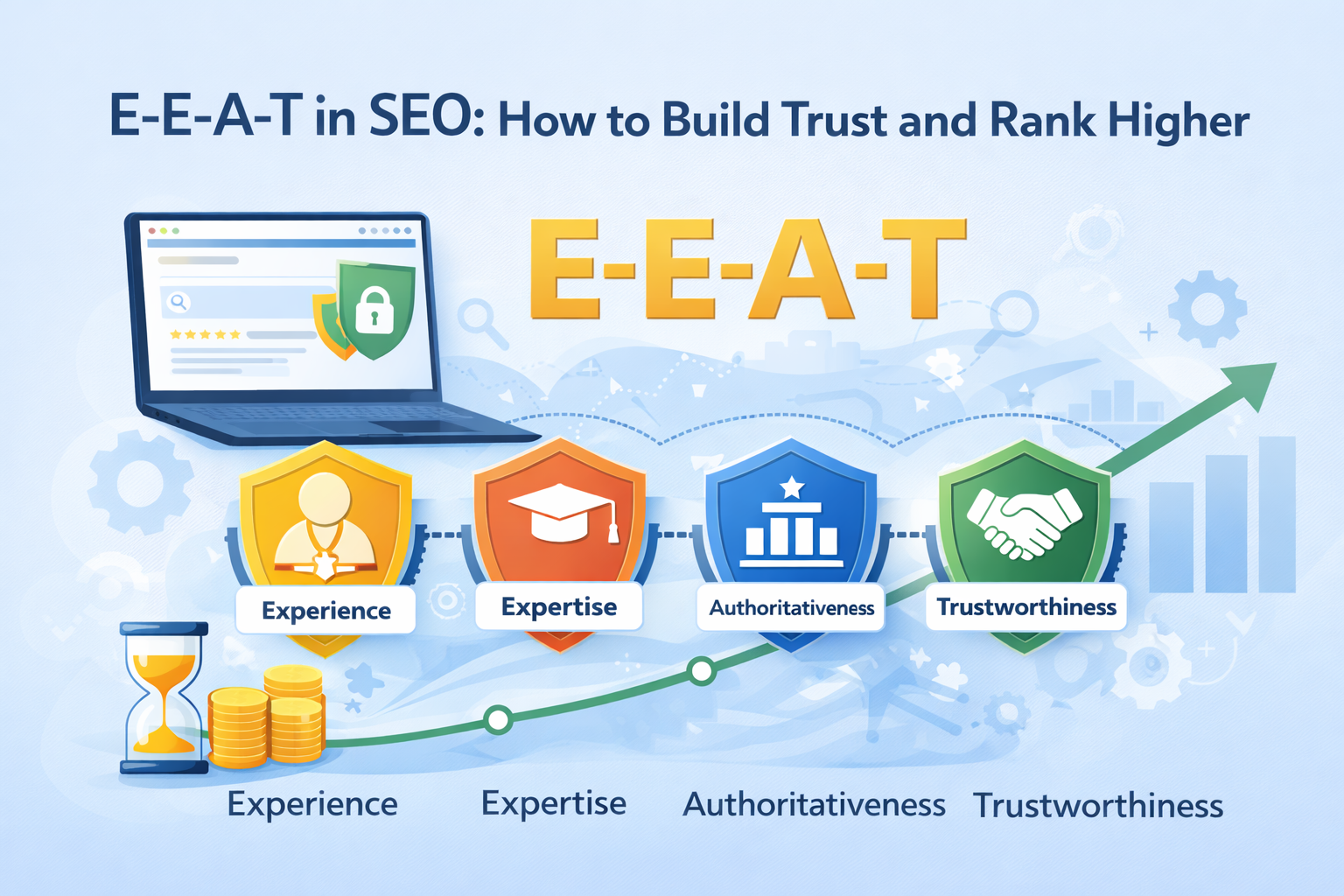
Working in SEO for a while now, I’ve noticed how much things have changed from the early days. Back then, ranking often depended on stuffing keywords or building large numbers of backlinks. Today, trust plays a much bigger role in determining search visibility.
I’ve seen websites with strong on-page SEO and decent links still struggle because they fail to appear credible. That shift is exactly where E-E-A-T becomes important.
Understanding E-E-A-T and Why It Matters
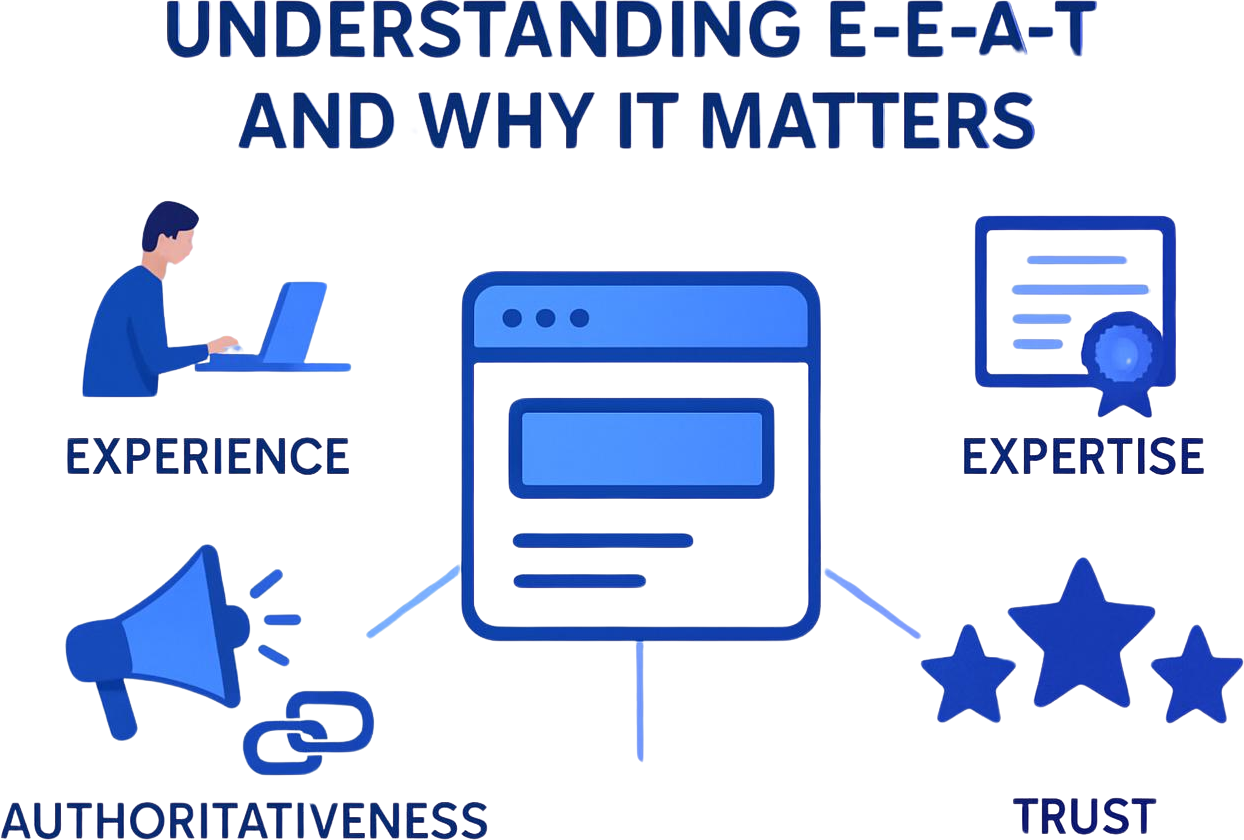
E-E-A-T is a framework from the Google Quality Guidelines, standing for:
- Experience
- Expertise
- Authoritativeness
- Trust
It is not a direct ranking factor, but it strongly influences how search engines evaluate your content and website quality.
From auditing multiple websites, I’ve noticed that sites demonstrating these elements tend to remain stable in rankings over time.
How Search Engines Have Become Smarter
Over the years, search engines have become far more intelligent. Algorithm updates consistently remove low-quality content while rewarding high-quality content.
Much of this shift aligns with the principles behind E-E-A-T.
Key trust-building practices include:
- Displaying clear author information
- Showing professional credentials
- Maintaining transparent website details
Websites that clearly display author information typically perform better than anonymous content.
Why Content Credibility Is Critical
Credibility is essential because search engines aim to deliver reliable information to users.
When building content strategies, it’s important to include:
- Real experiences
- Verified data
- Practical examples
Building website trust takes time, but once established, it creates a competitive advantage that shortcuts cannot replace.
Short-term SEO shortcuts often fail quickly.
How to Improve E-E-A-T in SEO
Improving E-E-A-T starts with demonstrating real experience.
After recent Google updates, it has become clear how valuable firsthand knowledge is.
Instead of writing general summaries, include:
- Real-life examples
- Personal insights
- Case studies with measurable outcomes
These elements significantly strengthen trust signals.
Highlight Author Expertise
Highlighting the author’s expertise helps establish credibility.
Simple additions such as an author bio can make a strong difference.
Include:
- Name
- Professional background
- Years of experience
- Certifications
Adding this information improves perceived authority and strengthens trust.
The Role of High-Quality Backlinks
Backlinks still play an important role, but quality matters far more than quantity.
Strong backlinks typically come from:
- Industry blogs
- High-authority websites
- Trusted publications
Focusing on quality sources improves authoritativeness and supports E-E-A-T signals.
Content Quality Is the Foundation
Content quality remains the foundation of strong SEO.
Key practices include:
- Keeping content accurate
- Updating older articles regularly
- Avoiding thin content
- Providing useful and relevant information
Additionally, technical trust signals matter:
- HTTPS security
- Visible contact information
- Privacy policies
- Detailed About pages
These signals help confirm that a website is legitimate.
The Power of Reviews and Testimonials
Collecting reviews and testimonials adds significant credibility.
Displaying user feedback:
- Builds trust
- Increases visitor confidence
- Strengthens overall site reputation
Encouraging customers to share experiences improves credibility over time.
Common Mistakes That Hurt E-E-A-T
Many websites weaken their E-E-A-T without realizing it.
Common mistakes include:
- Publishing content without author names
- Using outdated or incorrect information
- Skipping author bios
- Building low-quality links
- Copying duplicate content
Avoiding these mistakes helps maintain strong trust signals.
How Google Evaluates E-E-A-T
Google evaluates E-E-A-T using algorithms and quality raters.
Key evaluation factors include:
- Content accuracy
- Author credentials
- Site reputation
- External mentions
- User engagement
Websites with verified authority and transparent details consistently perform better.
E-E-A-T for Different Types of Websites
Different website types require different approaches.
Business Websites
Focus on:
- Company information
- Certifications
- Customer testimonials
These strengthen trust signals.
Blog Websites
Focus on:
- Author credentials
- Research-backed content
- Regular content updates
This improves content credibility.
E-Commerce Websites
Focus on:
- Secure payments
- Customer reviews
- Clear return policies
These increase trust factors.
The Future of E-E-A-T in SEO
Looking ahead, E-E-A-T will continue growing in importance.
Search engines are prioritizing:
- Authentic content
- Real expertise
- Verified information
- Trusted sources
Websites that focus on trust and authority will continue to perform well.
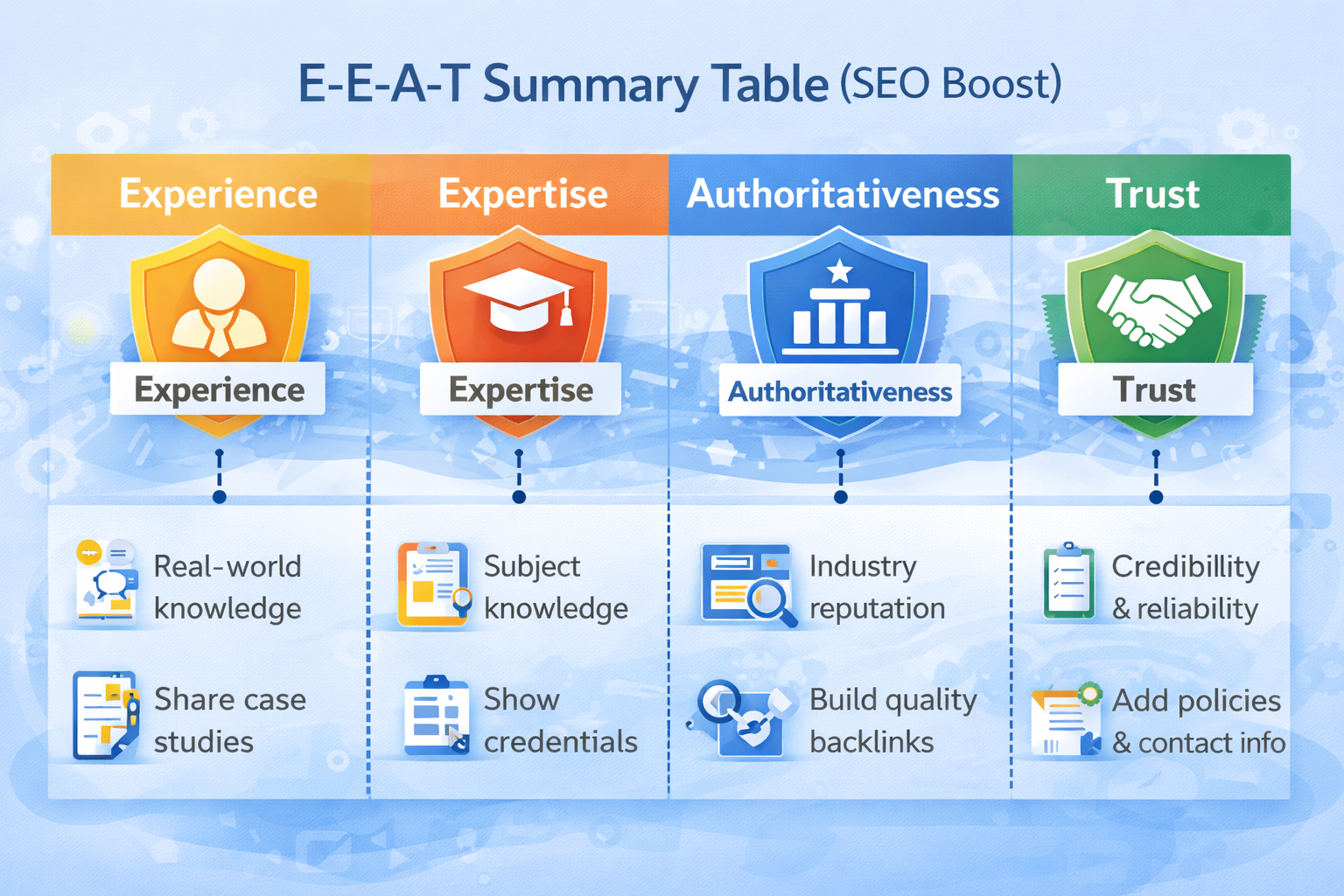
E-E-A-T Summary Table (SEO Boost)
Final Thoughts on E-E-A-T in SEO
After years of working in SEO, it has become clear that E-E-A-T is no longer optional — it is essential for long-term success.
Modern SEO is not just about keywords or backlinks. It is about earning trust through:
- Experience
- Expertise
- Authoritativeness
- Trust
Websites that consistently build these elements are far more likely to achieve sustainable rankings.
Tagged with :