

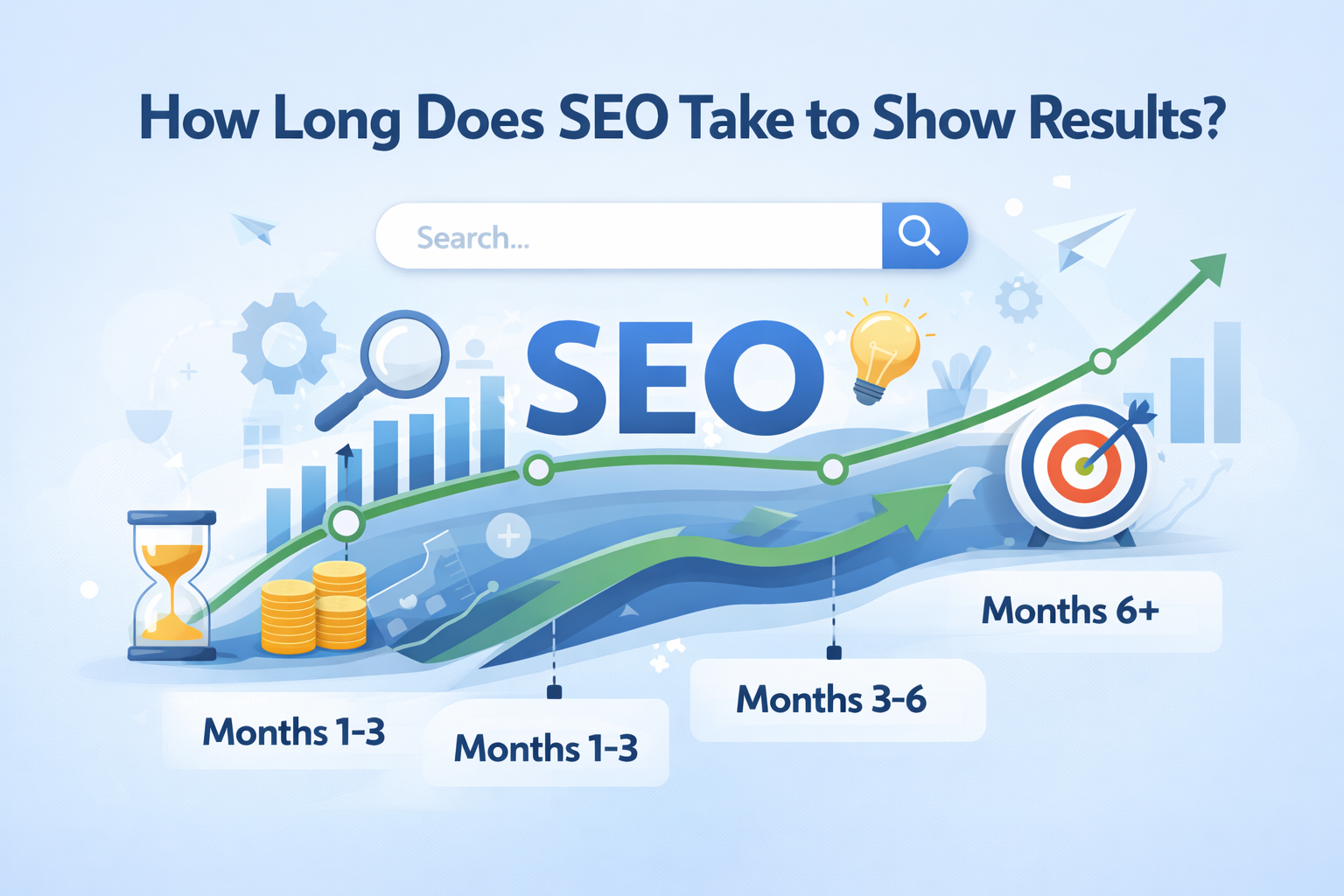
People always ask me how long it takes for SEO to actually work, especially if they run a website or an online business. It’s not like paying for ads where you see visitors right away.
SEO builds up slowly, like setting a solid foundation that keeps bringing in organic traffic for months or even years.
From working with different sites – whether new ones starting from scratch or established companies – I’ve noticed that the timeline depends on several factors, including:
- How tough the competition is
- Whether the site has strong domain authority
- How good the content really is
- The quality of backlinks pointing to it
Some sites get results quicker than others, but most follow a similar pattern.
SEO Timeline Broken Down by Months
The timeline for SEO is not always predictable, but breaking it down by months helps create realistic expectations – even though results don’t always follow an exact schedule.
Month 1 – SEO Setup and Technical Foundation
In the beginning, most of the work happens behind the scenes.
This usually includes:
- Auditing the site for SEO problems
- Researching keywords people search for
- Analyzing competitors
- Fixing technical SEO issues
- Improving site speed
- Setting up tools from Google to track performance
At this stage, don’t expect much traffic growth. Search engines are just starting to crawl the site and recognize changes.
Patience is important here, because skipping this stage can affect everything that follows.
Month 2 to 3 – On-Page SEO Optimization
During the next couple of months, the focus shifts to optimizing individual pages to make them more friendly for search engines.
This includes:
- Writing optimized SEO content
- Updating meta tags
- Adding internal links
- Optimizing images
- Cleaning up URL structure
Pages begin appearing in search indexes, some keywords start moving upward, and you may begin seeing more impressions.
Rankings may fluctuate during this stage, which is completely normal.
Month 4 to 6 – Content and Backlink Growth
Between months four and six, things usually begin to feel more noticeable.
You may:
- Publish high-quality blog posts
- Earn quality backlinks
- Write guest posts
- Optimize local SEO listings
- Improve overall user experience
Organic traffic starts increasing gradually, rankings improve, and early leads may begin to appear.
For many websites, this is the stage where visible progress starts.
Month 6 to 9 – Building Authority and Trust
Between six and nine months, the website starts gaining trust in the eyes of search engines.
Key activities include:
- Building topical authority
- Strengthening domain authority
- Creating content clusters
- Optimizing for mobile SEO
At this stage:
- Traffic increases significantly
- More keywords reach the first page
- Engagement improves
- Conversions begin increasing
Consistency becomes extremely important during this phase.
Month 9 to 12 and Beyond – Long-Term SEO Growth
After nine months and beyond, results begin to compound.
You should continue to:
- Update older content
- Build additional backlinks
- Target new keywords
- Improve conversion optimization
Rankings become more stable, traffic grows steadily, and leads become more predictable.
Over time, consistent SEO efforts stack together to create long-term growth.
Factors That Affect How Fast SEO Works
Not every website follows the exact same timeline.
Several factors influence how quickly SEO results appear:
- Domain age
- Niche competition
- Content quality
- Backlink profile
- Technical SEO health
- Frequency of content updates
Websites in low-competition niches often see results faster, while highly competitive industries may take longer.
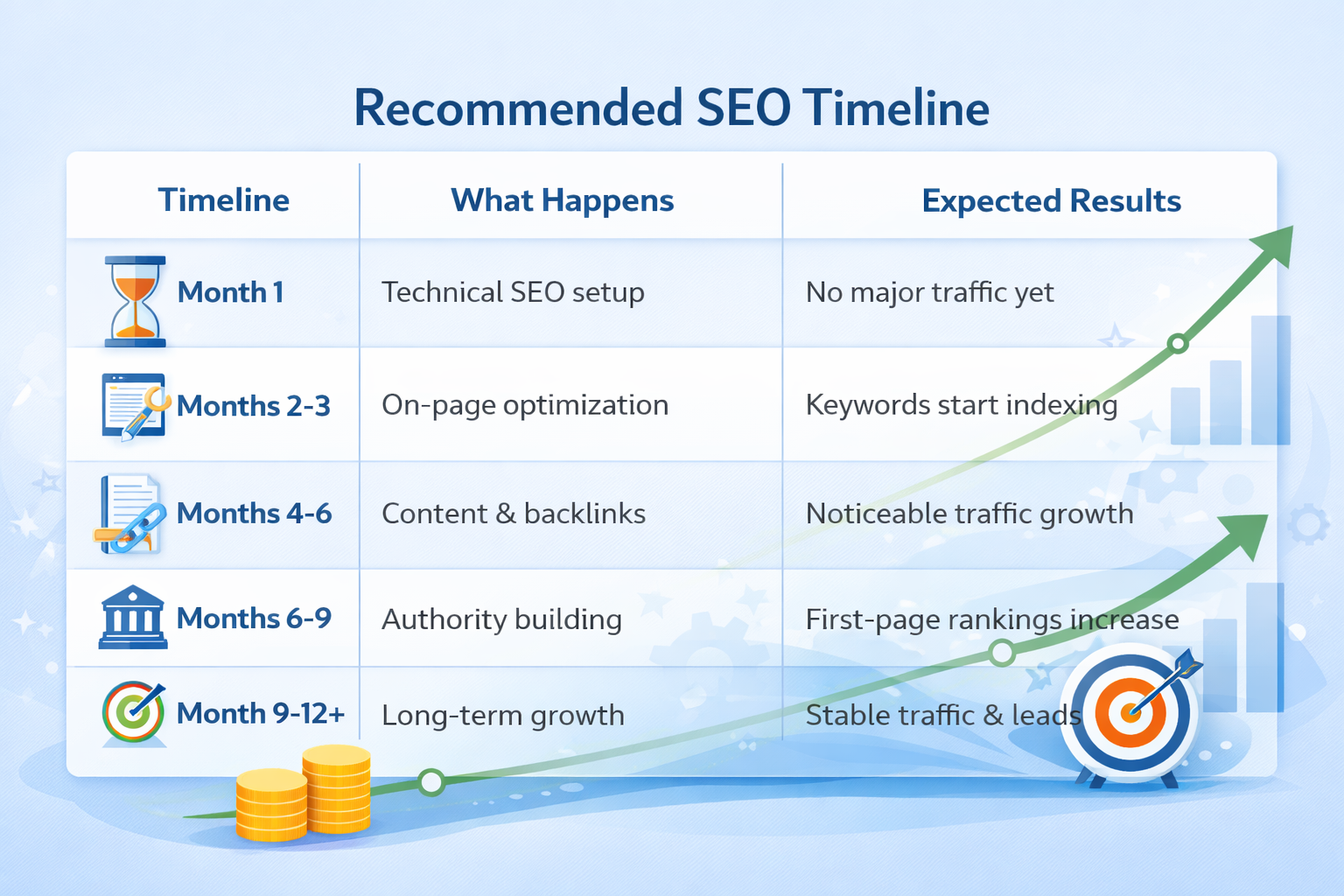
SEO Timeline Summary Table (Highly Recommended for SEO)
Final Thoughts
From my experience working with different websites, SEO is not a quick fix — it is a long-term strategy.
While small improvements may appear within a few months, strong and sustainable growth usually takes:
✔ 6–12 months
✔ Continuous effort
✔ Consistent content creation
Websites that stay patient and follow proven SEO practices are the ones that achieve lasting success.
Tagged with :